In today’s fast-paced, technology-driven world, marketing has taken many forms. While some businesses still swear by traditional marketing methods, others have moved entirely into the digital space. But which one is better—Digital Marketing or Traditional Marketing? To answer that, we need to break down their differences, advantages, limitations, and ideal use cases.
Understanding Traditional Marketing
Traditional marketing refers to the conventional methods of marketing that have been used for decades. This includes:
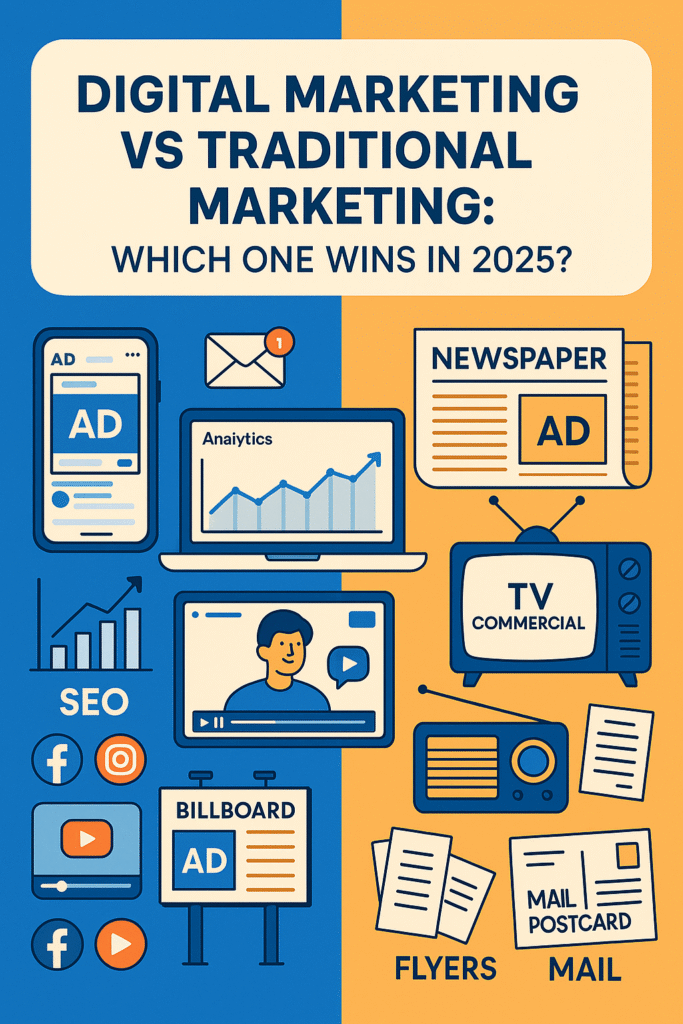
- Print Ads (newspapers, magazines)
- Broadcasting (TV and radio commercials)
- Direct Mail (catalogs, postcards)
- Outdoor Advertising (billboards, flyers, posters)
- Telemarketing and in-person events
These methods focus on mass marketing and are usually more expensive but often have high reach, especially in local markets or older demographics.
Advantages of Traditional Marketing
- Tangible and Memorable: Physical materials like brochures or TV ads often leave a lasting impression.
- Broad Audience Reach: Great for targeting non-digital users or older demographics.
- Brand Credibility: Traditional ads are often seen as more trustworthy by consumers.
Limitations of Traditional Marketing
- High cost with limited ROI tracking
- Inflexibility (once printed or aired, changes are difficult)
- Difficult to measure effectiveness precisely
- Limited interaction with the target audience
Understanding Digital Marketing
Digital marketing is the promotion of products or services through digital channels such as:
- Social Media (Facebook, Instagram, LinkedIn)
- Search Engines (Google Ads, SEO)
- Email Marketing
- Content Marketing (blogs, videos)
- Affiliate and Influencer Marketing
This approach thrives on data, analytics, and personalization, making it ideal for the modern, always-online consumer.
Advantages of Digital Marketing
- Cost-Effective: Lower cost per lead and better ROI.
- Real-Time Tracking: Analytics help measure what works and what doesn’t instantly.
- Targeted Advertising: You can define your audience by age, interest, location, and more.
- Global Reach: Even a small business can market internationally.
- Two-Way Communication: Consumers can interact, provide feedback, and build loyalty.
Limitations of Digital Marketing
- May not reach non-digital audiences
- Highly competitive space
- Requires constant updates and algorithm understanding
- Privacy concerns and ad blockers can reduce effectiveness
Key Differences at a Glance
| Feature | Traditional Marketing | Digital Marketing |
|---|---|---|
| Medium | Offline (TV, print, radio) | Online (social media, search engines) |
| Cost | High | Flexible & budget-friendly |
| ROI Measurement | Difficult | Easy with analytics tools |
| Audience Targeting | Broad | Highly specific |
| Engagement | One-way | Two-way, interactive |
| Flexibility | Low | High (real-time updates possible) |
Which One Should You Choose in 2025?
The answer depends on your target audience, budget, campaign goal, and industry.
- If you’re targeting a local audience or older demographic, traditional marketing may still be relevant and effective.
- If your audience is tech-savvy, spends a lot of time online, and you need measurable results, then digital marketing is the smarter choice.
Hybrid Approach: The Best of Both Worlds
In many cases, a combination of both—known as integrated marketing—can bring the best results. For example, a billboard ad might spark interest, while a follow-up social media campaign nurtures that interest into a sale.
Conclusion
Both digital and traditional marketing have their place in the modern business landscape. Traditional marketing still holds value in certain industries, but digital marketing offers flexibility, analytics, and reach that are hard to beat in 2025. The most successful brands are those that leverage the strengths of both to create a seamless, omnichannel experience for their customers.
